




Advertisement
Advertisement
An Italian journalist accused of 'racism' for excluding Ayo Edebiri from a question about the Black Lives Matter movement last week has defended her actions with a controversial statement.
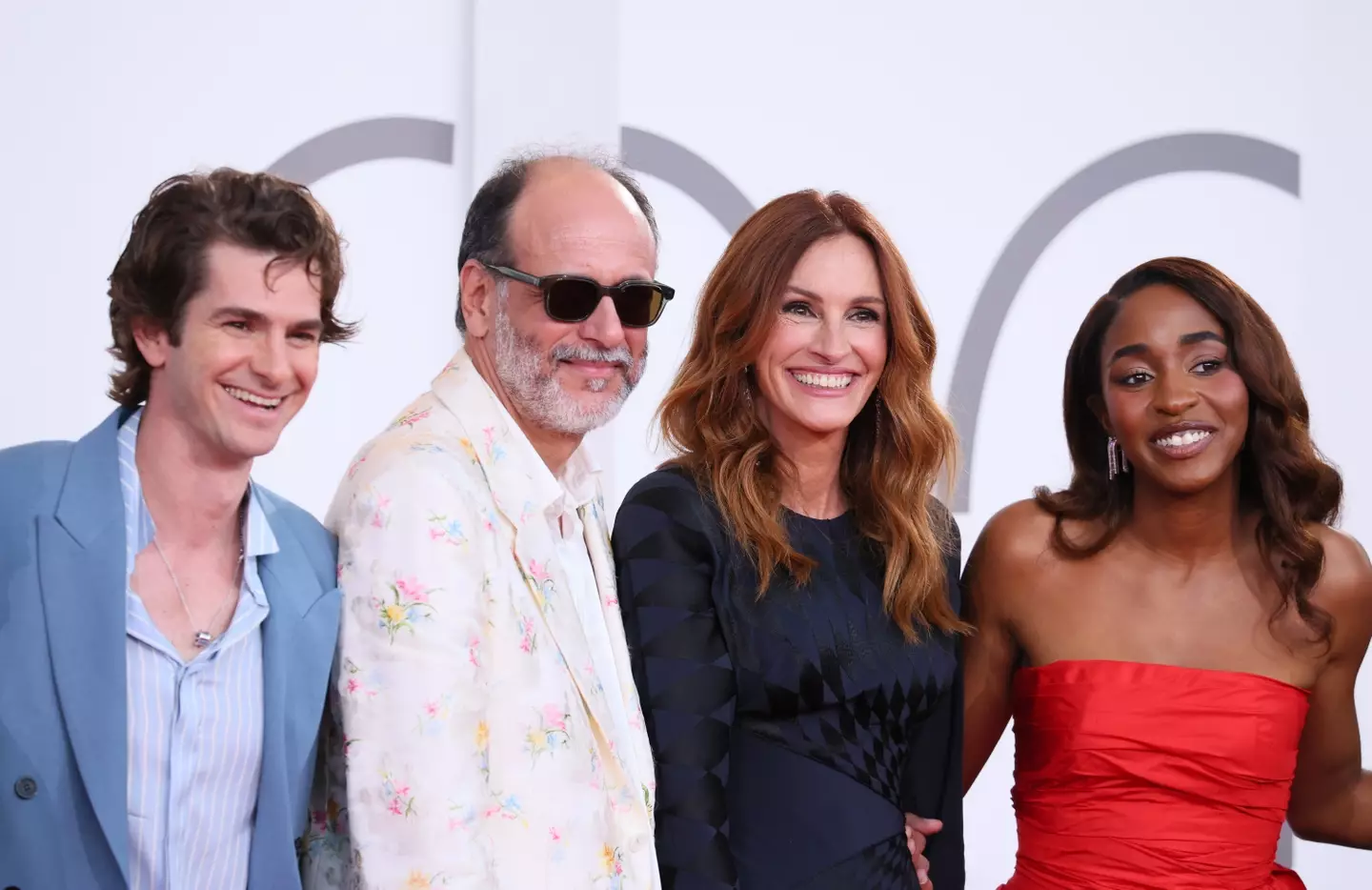
Edebiri was accompanied by Andrew Garfield and Julia Roberts at the Venice Film Festival, where the trio was promoting their latest project, the psychological thriller After The Hunt.
During a particular interaction, the group sat down with film and television journalist Federica Polidoro.
In footage that has since gone viral for unfortunate reasons, several minutes into the interview, the reporter posed a question about various political movements in America.
Advert
Directing her question to Garfield and Roberts—both of whom are white—she inquired what they 'anticipate in Hollywood after the MeToo movement and the Black Lives Matter have concluded'.
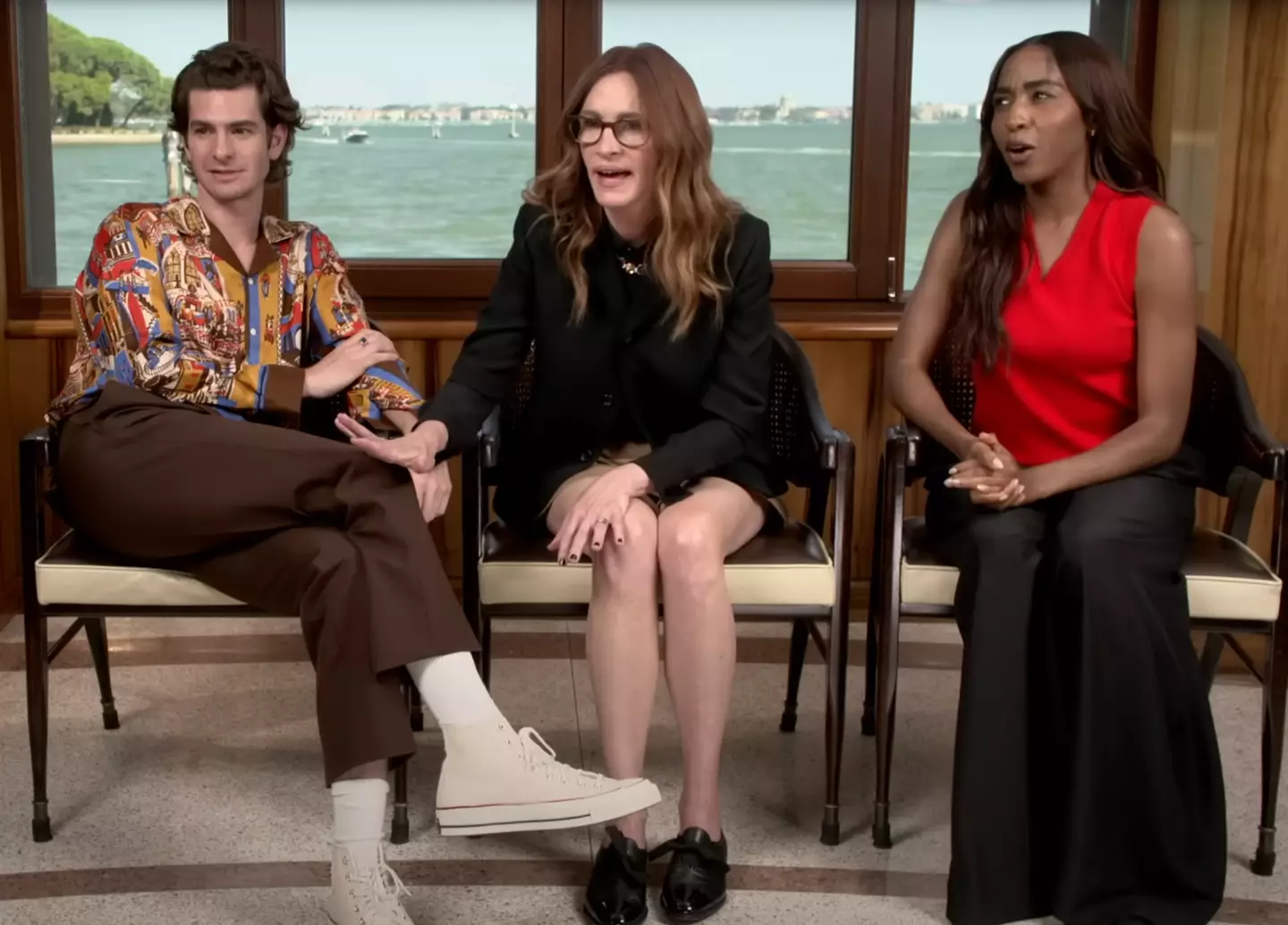
How did Ayo Edebiri, Julia Roberts, and Andrew Garfield respond?
Visibly surprised by the question and the fact that Polidoro seemed to completely omit Edebiri—a multi award-winning Black actress—Roberts, 57, started by asking the journalist to remove her sunglasses.
Advert
"Can you repeat that?" she asked, seemingly giving Poliodoro the opportunity to include Edebiri, 29, in the question. "With your sunglasses on, I can't tell whom you're addressing."
Garfield, 42, also seemed puzzled by the question, turning directly to Edebiri and adding: "Umm... well...".
Despite their attempts to have the question revised, Poliodoro insisted, asking: "Now that the #MeToo era and the Black Lives Matter [movement] are over, what can we expect in Hollywood?"
She further elaborated, referencing 'what we lost ... with the politically correct era'.
What did Ayo Edebiri say?
Advert
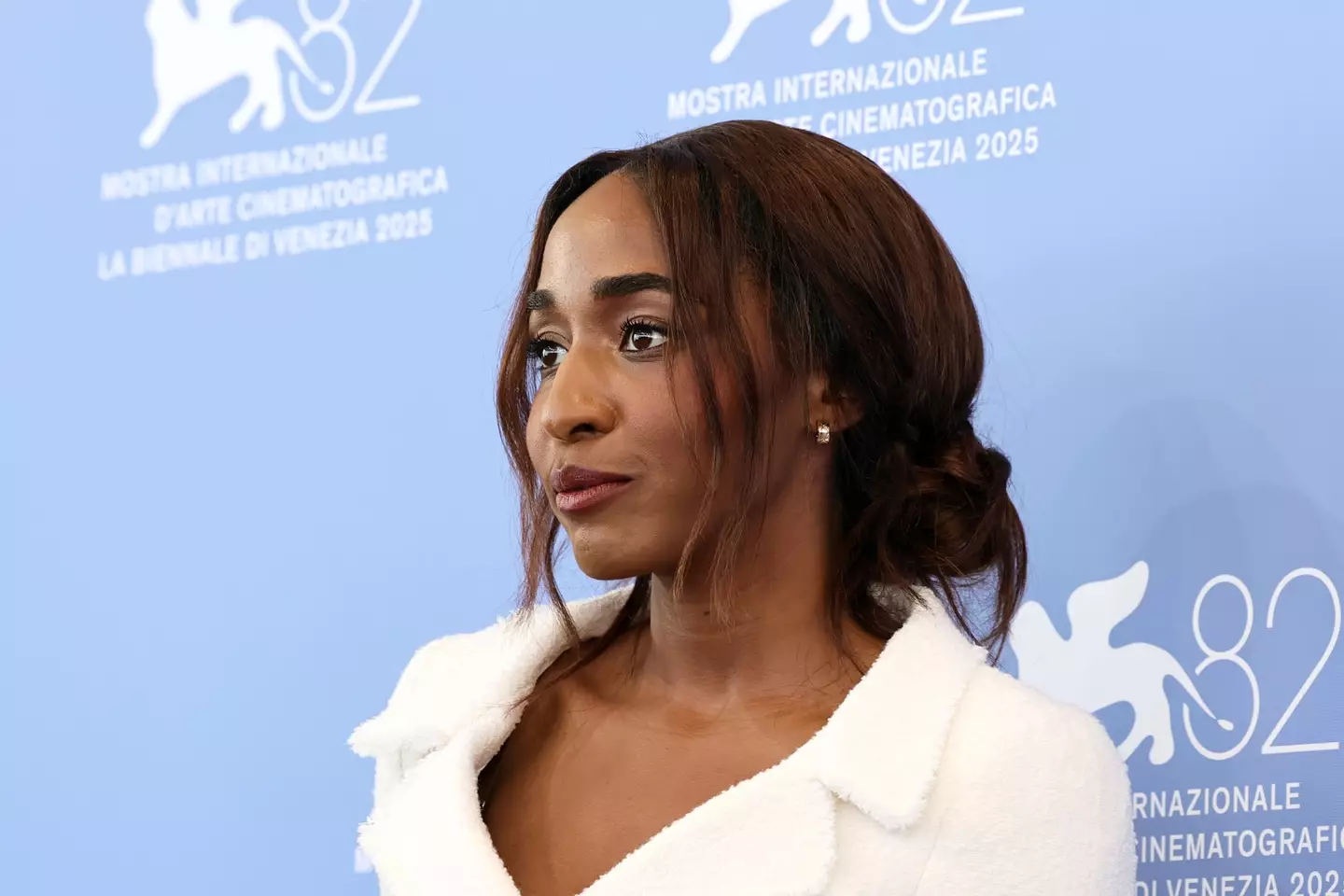
Rightfully stepping in, The Bear's Edebiri responded to the reporter: "Yeah, I know that that's not directed at me, and I don't know if it's intentional that it's not for me, but I am curious."
Speaking about the two crucial movements, she boldly added: "I don't believe it's over. I don't think it's over at all."
Pretty Woman star Roberts then agreed: "It's not over."
"I think maybe hashtags aren't used as frequently," Edebiri continued. "But I do think there's ongoing work being done by activists and people every day, which is beautiful, important work that isn't finished—it's very, very active for a reason, because this world is really charged.
Advert
"And that work isn't finished at all."
The TV star continued to suggest: "Maybe there's not mainstream coverage in the way there might have been, daily headlines like eight or so years ago, but that doesn't mean the work is done.
"That's what I would say."
What has Federica Polidoro said since?
The journalist has since issued a statement in response to the backlash, pushing back somewhat against her critics.
Advert
Posting on Instagram on Saturday (7 Sept), Poliodoro began her extensive message by stating: "Following an interview, I have been subjected to personal insults and attacks because of a question that, for some reason, was not well received by certain members of the public.
"I find it striking that those who unjustly accuse me of racism and consider themselves champions of justice find violent language, personal attacks, and cyberbullying acceptable."
The reporter continued: "I would like to clarify that, rather than focusing on the thoughtful responses of Ayo Edebiri, Julia Roberts, and Andrew Garfield, the discussion has centered solely on how I should have phrased the question.
"All contributions from those present were reported in full in the published interview, without any omissions."
Standing her ground and refusing to apologize for the heated interaction, Poliodoro continued: "To date, I am not aware of any protocol that dictates the order in which questions must be asked in an interview.
"Censoring or delegitimizing questions considered ‘uncomfortable’ does not align with democratic practice. Only the Journalists’ Association is authorized to evaluate the work of professionals in the field, not social media tribunals."
Addressing accusations of racial prejudice, Poliodoro claimed to have 'interviewed people of every background and ethnicity', adding: "And my own family is multi-ethnic, matriarchal, and feminist, with a significant history of immigration."
The journalist continued: "I have collaborated for over twenty years with numerous national and international publications of all political orientations, always approaching my work with openness and professional rigor.
"In my view, the real racists are those who see racism everywhere and seek to muzzle journalism, limiting freedom of analysis, critical thinking, and the plurality of perspectives."
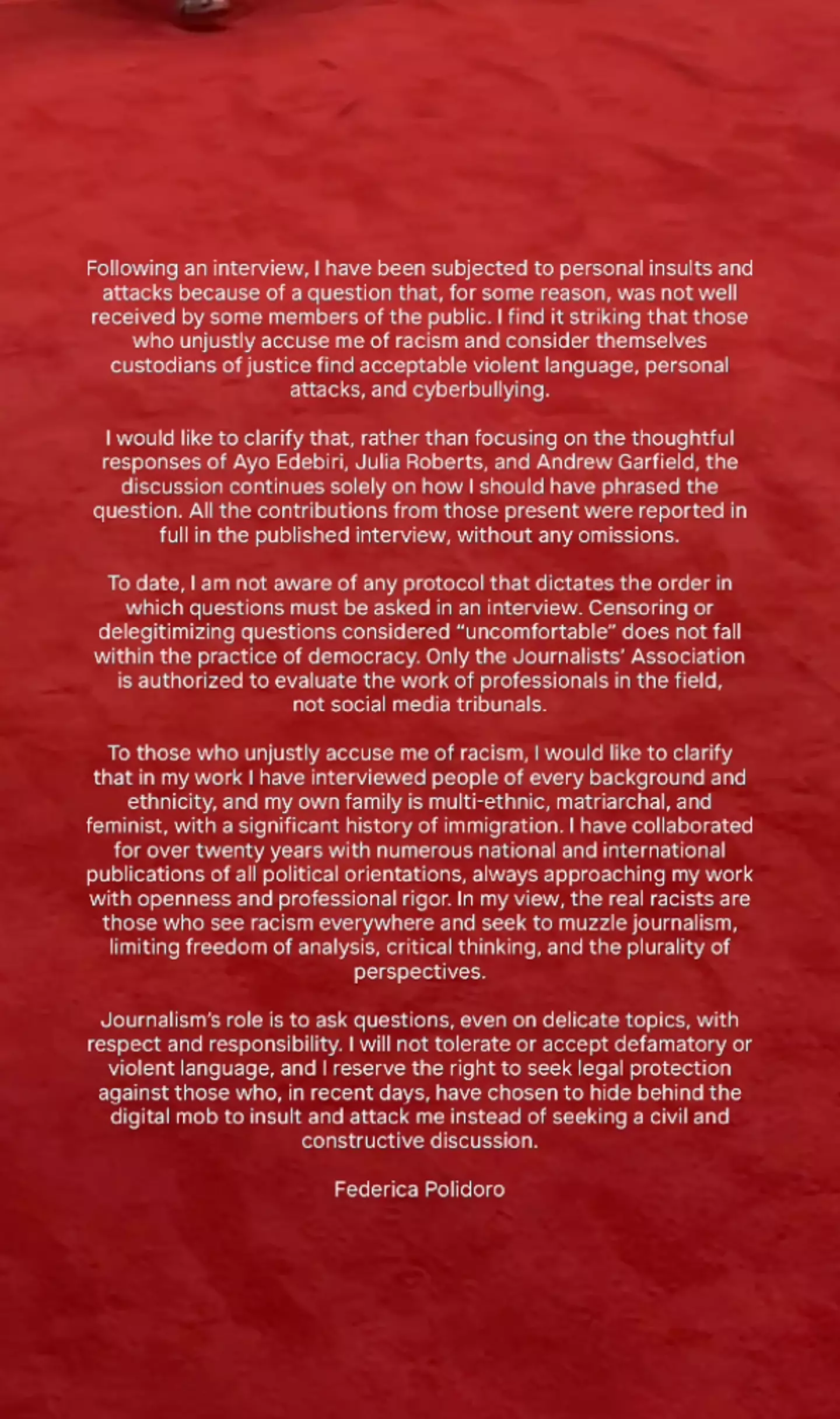
Defending her approach once more, Poliodoro added: "Journalism's role is to ask questions—even on delicate topics—with respect and responsibility.
"I will not tolerate or accept defamatory or violent language, and I reserve the right to seek legal protection against those who, in recent days, have chosen to hide behind the digital mob to insult and attack me instead of engaging in a civil and constructive discussion."

Advertisement
Advertisement
Advertisement


